

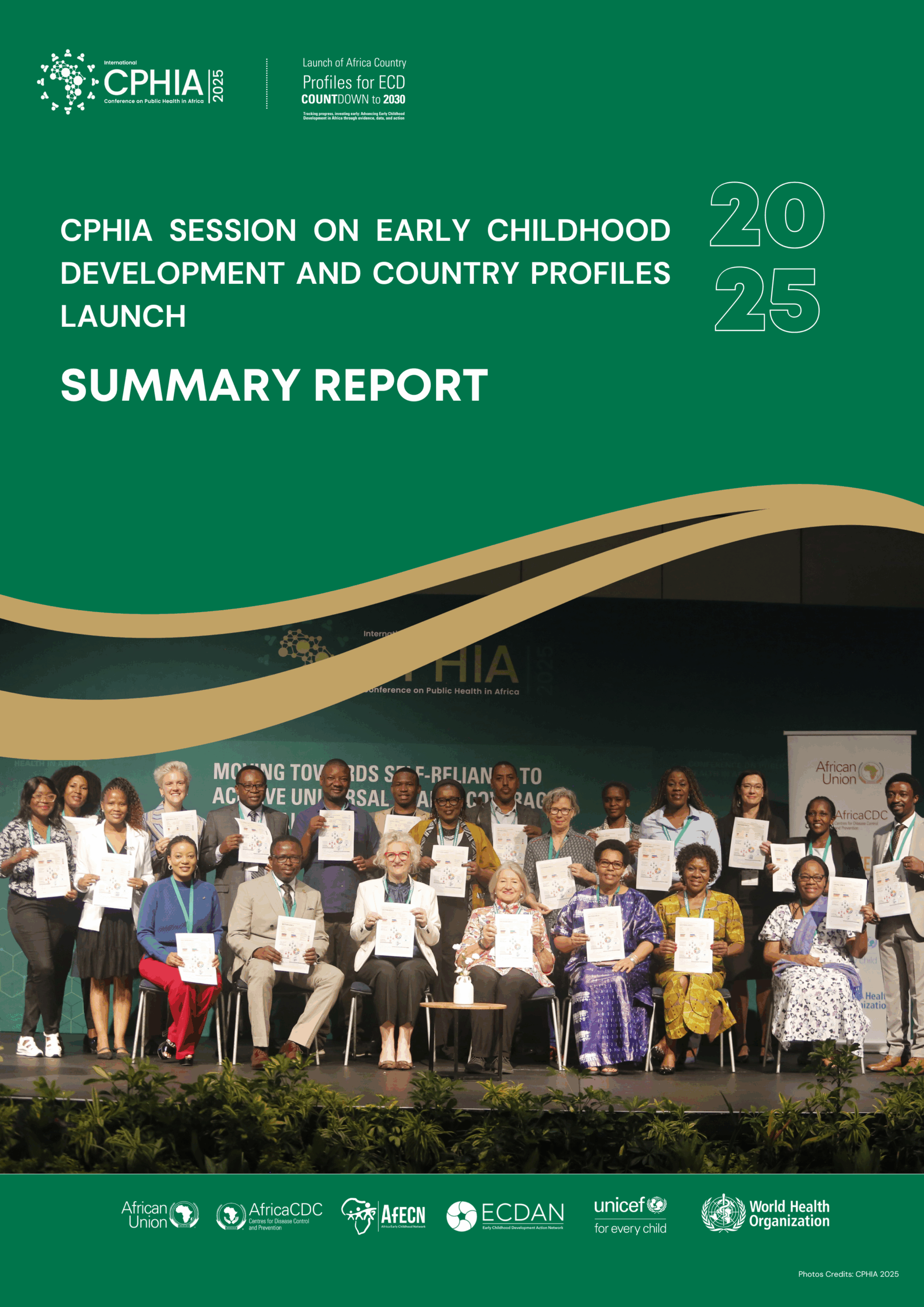
Launch of the Africa Country Profiles for Early Childhood Development
“New Data-Driven Tool Launched to Advance Early Childhood Development Across Africa.”
A groundbreaking set of Africa Regional and Country Profiles on Nurturing Care for Early Childhood Development (ECD) was launched at the Conference on Public Health in Africa (CPHIA). These profiles consolidate critical data from across the continent to track progress and guide action for Africa’s youngest citizens.
Structured around the Nurturing Care Framework, the profiles provide reliable, government-approved data on health, nutrition, early learning, responsive caregiving, and safety and security. The data reveals both progress and persistent challenges, highlighting that Africa remains the most at-risk region for poor child development outcomes.
This essential resource is designed to empower policymakers, advocates, and researchers to:
- Drive evidence-based policymaking and targeted investments.
- Strengthen national data systems and integrate ECD indicators.
- Catalyze cross-country learning and region-specific interventions.
The launch session featured leading experts who underscored the need for “data-driven compassion and accountability,” transforming numbers into tangible action for every child. The event concluded with a unified call to accelerate progress towards the 2030 goals and a shared commitment to ensure all children in Africa not only survive but thrive.
Download the report now to explore the data and join the movement to invest early in Africa’s future.
Country Profiles for Early Childhood Development
The Country Profiles for Early Childhood Development (ECD) offer one of the most comprehensive global snapshots of the state of young children’s wellbeing across 197 countries. Developed by UNICEF’s Data and Analytics Section in collaboration with Countdown to 2030 and the Nurturing Care ECD Metrics Joint Technical Working Group, these profiles bring together the latest comparable data on the conditions that support children to survive, thrive, and learn. They highlight key demographic trends, threats to early development, nurturing care services, and the policy environments that shape the earliest years of life.
Rooted in the Nurturing Care Framework, each profile compiles indicators across health, nutrition, early learning, responsive caregiving, and safety and security, critical components proven to influence a child’s developmental trajectory. The profiles also spotlight major gaps in data availability, particularly for the youngest children, and underscore persistent inequalities by geography, gender, and household context. By presenting country-specific baselines and trends, the report aims to strengthen accountability, inform national planning, and catalyze investments in ECD.
These updated 2025 profiles serve as an essential resource for governments, researchers, advocates, and development partners committed to improving outcomes for young children. They provide evidence to guide policy reform, support cross-country comparisons, and inspire coordinated action toward achieving the Sustainable Development Goals. Above all, the profiles reaffirm the urgent need for stronger, better-resourced systems that give every child the nurturing care they need to reach their full potential.

Africa Continental Childcare Conference 2025: Advancing Quality and Inclusive Childcare Systems
The Africa Continental Childcare Conference, held from 18-20 June 2025 at the African Union Commission Headquarters in Addis Ababa, convened over 300 stakeholders from across Africa and beyond to accelerate action toward accessible, affordable and high-quality childcare systems. Co-hosted by the African Union Commission, Africa Early Childhood Network and partners, the conference marked a pivotal moment in positioning childcare as a cornerstone of Africa’s development agenda.
The convening brought together ministers, policymakers, practitioners, civil society, development partners and researchers to align on a shared vision: that childcare is not a peripheral social service, but essential infrastructure for human capital development, gender equality and inclusive economic growth.
Discussions highlighted the urgent need for a systems approach to childcare, integrating policy, financing, service delivery, workforce development and social norms. While challenges such as fragmented policies, limited financing and undervalued care work persist, the conference showcased promising, African-led solutions. Country experiences from Ethiopia, Rwanda, Kenya, Zambia and others demonstrated scalable models rooted in community systems, public investment and multisectoral coordination.
A strong emphasis was placed on policy commitment and reform, with governments increasingly embedding childcare within national development frameworks, labour laws and social protection systems. The conference also underscored the importance of caregiver wellbeing, male engagement, and inclusive services for vulnerable groups, including children in humanitarian settings and those with special needs.
Financing emerged as a critical priority, with calls for increased domestic investment, innovative funding models and stronger alignment with Ministries of Finance. Participants also highlighted the importance of data, research and accountability systems to track progress and inform policy decisions.
The conference concluded with a unified Call to Action, urging African Union Member States to allocate dedicated funding for childcare, strengthen regulatory frameworks and institutionalise childcare within national agendas. It further called for elevating childcare and early childhood development as a continental priority, including consideration as a future African Union Theme of the Year.
Ultimately, the conference reaffirmed that Africa already possesses the knowledge, innovation and leadership needed to transform childcare systems. What is required now is sustained political will, strategic investment and coordinated action to ensure that every child has the opportunity to thrive.
Evaluation Report of the Campaign for Accelerated Reduction of Maternal Maternity in Africa 2009 -2019
The evaluation of CARMMA campaign from the period May 2009 to December 2018 was commissioned by the African Union Commission (AUC), Department of Social Affairs to determine the relevance, effectiveness, impact and sustainability of the campaign and to make recommendations that would allow the campaign to further contribute to the reduction of maternal, newborn and child deaths and the achievement of the AU’s ‘Transformational Agenda 2063’, the global sustainable Agenda 2030 and other global commitments. The evaluation comprised of a literature and data review, interviews with key stakeholders throughout Africa, an assessment of national MNCH indicators and a comparative analysis of the 48 African member states that had launched the CARMMA campaign by the end of 2017.
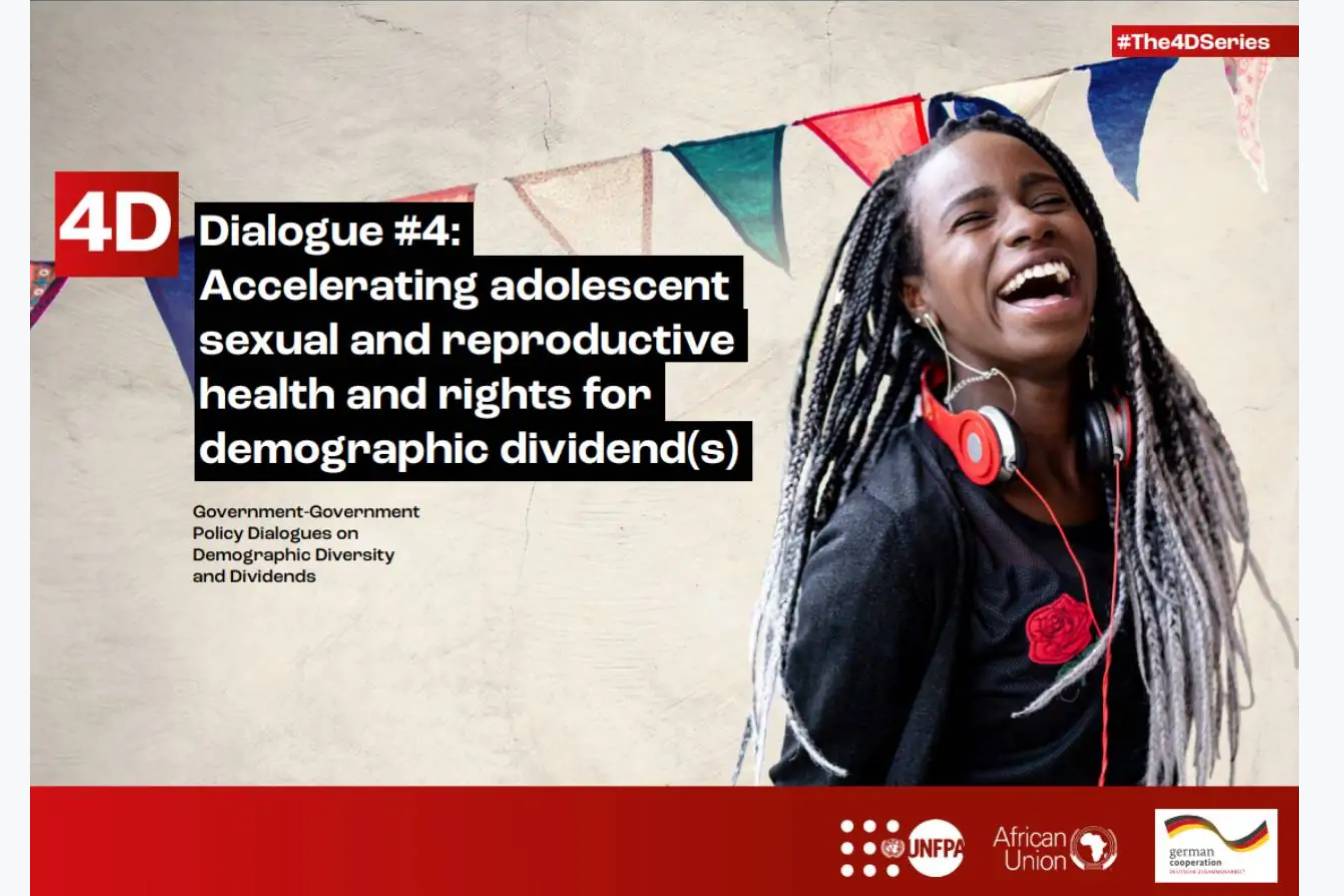
Accelerating Adolescent Sexual and Reproductive Health and Rights for Demographic Dividend(s)
On 20 October 2021, more than 140 participants, experts, and speakers from 47 countries convened virtually in the fourth edition of the Government- Government Policy Dialogue series on Demographic Diversity and Dividend(s). The 4D Series, jointly organized by the African Union Commission (AUC), the United Nations Population Fund (UNFPA) and the Government of Germany builds on discussions launched in 2019 at the Nairobi Summit on ICPD25 around policies and practices that countries can apply in population and development planning.
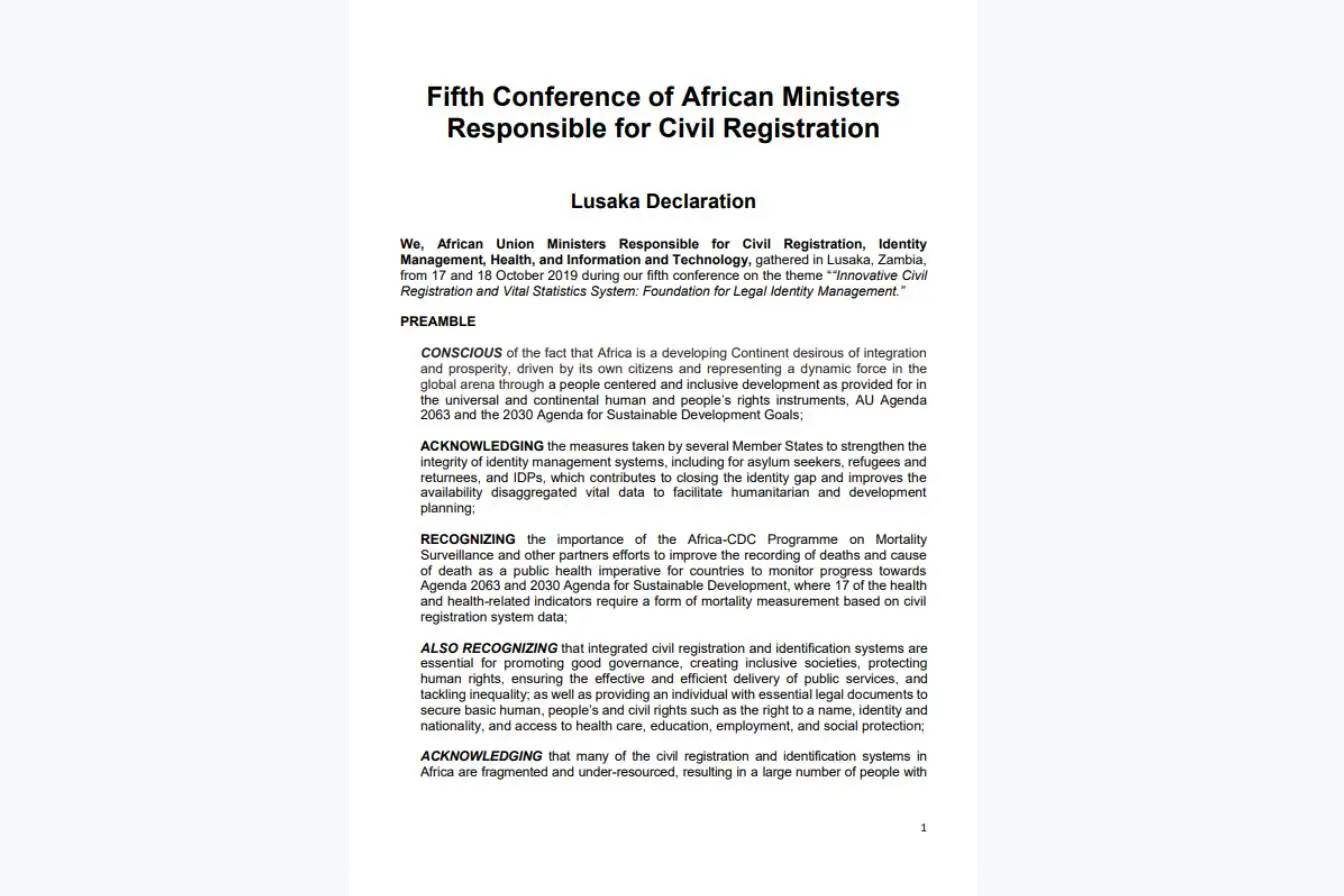
Fifth Conference of African Ministers Responsible for Civil Registration
We, African Union Ministers Responsible for Civil Registration, Identity Management, Health, and Information and Technology, gathered in Lusaka, Zambia, from 17 and 18 October 2019 during our fifth conference on the theme ““Innovative Civil Registration and Vital Statistics System: Foundation for Legal Identity Management.”